


 Photo Courtesy of the Basilica of the Sacred Heart
Atlanta
Lighting artisan uncovers family link to Atlanta Basilica project
By ANDREW NELSON, Staff Writer | Published November 13, 2025 | En Español
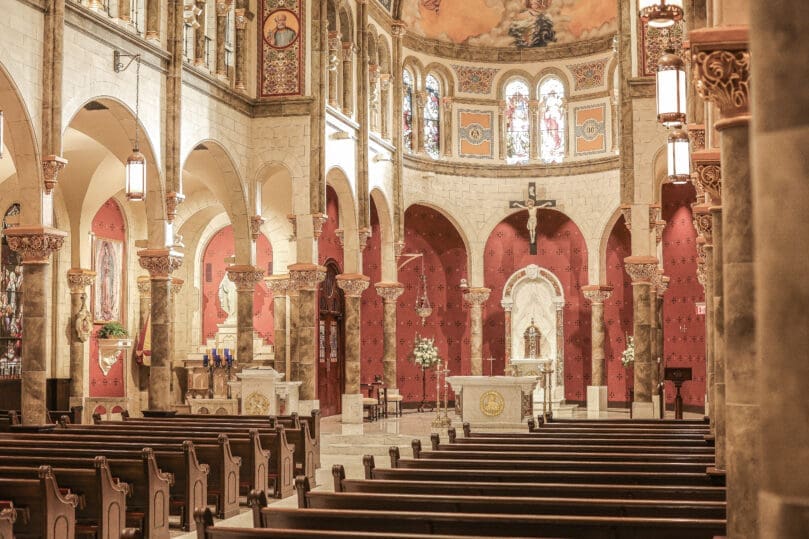
ATLANTA—When Edwin Rambusch saw the dozen lanterns suspended along the length of the nave of the Basilica of the Sacred Heart of Jesus, their design and style felt familiar.
The fixtures added “just a glow” to the interior, complementing the light streaming through the stained-glass windows. Rudimentary by today’s technology, the lights illuminated evening services and events when clouds or stormy weather dimmed the natural light.
His feeling was confirmed in the parish’s 1980 centennial celebration program. A sketch showed his grandfather installed the lanterns in the late 1930s. The basilica, completed in 1898, is one of the oldest churches in the Archdiocese of Atlanta.
Generations of responsibility
“It’s somewhat humbling,” said Rambusch, who is the fourth generation in the family business specializing in interior architecture, lighting, liturgical furnishings and renovation. His great-grandfather started the company in New York City, now located in New Jersey.
“You have to realize that you’re being given a real responsibility to be careful and to do the right thing,” he said.
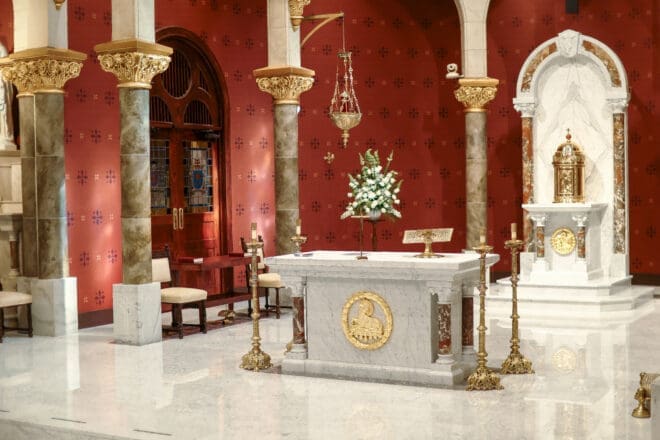
A dedication Mass for the redecorated sanctuary of Atlanta’s Basilica will be Nov. 16. The first major sanctuary restoration since the 1960s, the effort was part of the parish’s “For Such a Time as This” project.
Restoring the sacred
The Rambusch firm, in operation for more than 125 years, has recently completed a restoration of the historic downtown Atlanta church as part of the “For Such a Time as This” project. It is estimated to cost $4 million. It is the first major interior update since the 1960s.
In 2024, the project faced resistance from some parishioners. They feared the changes could compromise the church’s artistic and spiritual heritage. Though the building was entered into the National Register of Historic Places in 1976, parish leaders emphasized the need for a welcoming worship space that matched current liturgical guidelines while respecting the church’s history.
Father John Howren, pastor, said the many elements of the redecorated basilica—such as the liturgical furnishings, flooring, pews, lighting, AV system and the Marist Chapel—came together with “the harmony and warm engaging presence it has” through the efforts of the deeply skilled contractors.
“Our parish community opened its heart to demonstrate an unselfish love, respect and commitment for our parish’s past and future. Instead of finishing the redecoration project in 2030, we have finished in 2025,” he said. “Once again, Divine Providence has been at work. I now pray that God will bless the work of our hands and hearts; and that he will receive all glory, laud and honor from those who seek, serve and worship him in this beautiful sacred place.”
A focus on liturgical elements
The Rambusch company updated the original fixtures and designed and installed key items used in worship, including the altar, ambo and tabernacle.
Rambusch said the idea behind the lighting pattern was that the lights should be “felt and not seen.” The focus is on the illuminated liturgical elements with the fixtures hidden in the environment, he said. The original lanterns remain in the church, restored and reused in the new system.
For the lights, the company crafted eight distinct “scenes” for various occasions in the church, from Mass with an emphasis on the altar and the sanctuary to weddings when the center aisle is illuminated.
Working with the parish leaders, the design team responded to the community’s desire for the sacred elements to also teach, linking them through designs and symbolisms of faith.
These new liturgical elements—ambo, altar, tabernacle and crucifix—were purposefully redesigned to unify all the liturgical appointments, using marble and wood and adorned with gold leaf. In contrast, the former church featured a variety of designs that were “not harmonious with each other,” he said.
The renovation included the company converting a storage space into a new eucharistic chapel, called the Marist Chapel, honoring the Society of Mary which helped establish the church in 1880.
Three generations later, just as his grandfather’s work enhanced the basilica in the 1930s, Rambusch finds satisfaction in thoughtful details like repurposing the church’s heritage, from the lanterns to the artifacts for the chapel. He said designs should honor both utility and heritage.
