


Walker Percy’s Other New Orleans: ‘A Confederacy of Dunces’ by John Kennedy Toole
By DAVID A. KING, Ph.D. | Published March 20, 2026
Whenever I plan a trip, I always try to immerse myself in the art and culture of the place—its music, its literature, its film. As I am headed to New Orleans in a few weeks, for the first time in more than 15 years, I have been revisiting much of the great 20th century works associated with this unique, and uniquely Catholic, city.
I have watched Elia Kazan’s wonderful Film Noir, “Panic in the Streets,” as well as his brilliant adaptation of Tennessee Williams’ “A Streetcar Named Desire.” I have listened to the early, pioneering Jazz of Louis Armstrong and Sidney Bechet. I have read for maybe the tenth time Walker Percy’s debut masterpiece “The Moviegoer.” And, finally, after decades of putting it off, I have read the classic New Orleans novel “A Confederacy of Dunces” by the gifted and tragically doomed John Kennedy Toole.
I confess I don’t always enjoy novels. I associate them with prescribed school curriculum, carefully planned teaching, and work. I prefer the immediacy and brevity of short stories and poetry, or the wonder of a 90-minute film. Having done penance as a book club leader for many years before I had children, I can attest that many late 20th century novels are a ponderous bore loaded with pretension and tedious prose. While I love the great classics of the 19th century and the high modernists such as Faulkner, Fitzgerald and Hemingway, I feel like the feature film is more relevant to the 20th and 21st centuries than long prose fiction.
In short, I’m reluctant to read contemporary novels. So was the Catholic novelist and essayist Walker Percy. As Percy writes in his introduction to the posthumously published novel by John Kennedy Toole that he ushered into publication more than 40 years ago: “Over the years I have become very good at getting out of things I don’t want to do. And if ever there was something I didn’t want to do, this was surely it: to deal with the mother of a dead novelist and, worst of all, to have to read a manuscript that she said was great.”
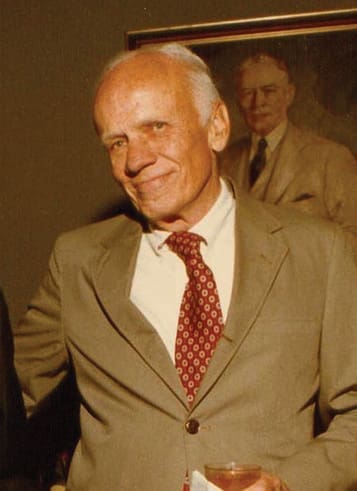
Catholic novelist and essayist Walker Percy helped to publish “Confederacy of Dunces,” by John Kennedy Toole after reading it upon the insistence of the dead author’s mother. Once Percy started the manuscript, he couldn’t stop. Photo from Wikimedia Commons
Percy eventually agreed to read the manuscript, and once he started, he couldn’t stop. He thought he’d give up after the first sentences, first paragraph, then the first page, or maybe the initialepisode, or the opening chapter. He couldn’t stop: “surely it was not possible that it was so good.” But it was. Percy recognized the book as a classical comic masterpiece, and understanding that its brilliance in rendering place, character and language was astonishing, he argued for its publication by LSU Press in 1980.
“A Confederacy of Dunces” owes something to the influence of Walker Percy’s own great novel about the city; indeed, it owes something to almost every comic novel ever written, from Cervantes to Dickens, from Twain to O’Connor. Yet as much as the book captures the essence of New Orleans, it also becomes a classic of American and even world literature.
Toole achieves this feat through his gift for creating believable and memorable characters. For a novel to succeed fully, character development is essential, and Toole is a master of bringing fictional characters into life. That the hero of the novel—Ignatius J. Reilly—is now enshrined as a statue in the New Orleans downtown business district tells you how well Toole succeeded.
Binx Bolling, the anti-hero of Percy’s “The Moviegoer,” doesn’t have a statue in New Orleans, though he surely deserves it. Our culture doesn’t often honor the contemplative or the seeker. We do, however, appreciate the underdog, the misfit, the misunderstood, and if we don’t really appreciate him, we are at least curious.
An unflinching portrait of humans
You can’t read “A Confederacy of Dunces” without curiosity. You also can’t read it without an absolute gumbo of hysterical laughter, horror and disgust. Among the many things that make it a Catholic novel is its unflinching portrait of the City of Man. New Orleans becomes much like St. Augustine’s Carthage, full of lust, appetite, greed and the grotesque. For the contemporary reader, some aspects of the novel are surprising; some border on shocking. It certainly isn’t a book for those whose taste and manners are easily affronted. Some of the troubling content deals with depictions of race and sexual mores that are associated with the time in which the book was written. Having been warned, also keep in mind that the book’s setting and attitudes are the opposite of what Ignatius strives for. Like St. Augustine, who prays “Lord grant me chastity and continence, but not yet,” Ignatius’ heart really yearns for the City of God, but his idealism can’t quite catch up with his appetites.
Because of the fascinating story behind Percy’s efforts at publication, readers are also fascinated by the life and mind of the book’s author John Kennedy Toole.
Winning Walker Percy over
Born and raised Catholic in New Orleans, Toole was a prodigy with a brilliant gift for comedy and mimicry. Educated at both Tulane and Columbia, he drifted between teaching jobs at small local colleges and a stint in the Army in the early 1960s, where he began writing “A Confederacy of Dunces.” Much of the material in the novel is drawn from autobiography. Ignatius’ relationship with his mother is not unlike Toole’s own. His jobs at Levy Pants and Paradise Vendors are drawn on events from Toole’s life. Characters are based upon people he knew from colleges and the military.
Toole worked on the novel for about four years, then started sending his manuscript to publishers. The book was tentatively accepted for publication, but Toole could not tailor a conventional ending that his editor demanded. Depressed at his failure, Toole committed suicide in 1969 by inhaling the carbon monoxide from his car’s exhaust. He died at age 31, leaving a copy of the novel’s manuscript on top of an armoire in his bedroom.
Ms. Toole tried for many years to have the book accepted for publication. She sent it to at least seven publishers, all of whom rejected it. A “picaresque” novel, the book depends upon developing its rogues and eccentrics in an episodic structure. This somewhat old-fashioned approach makes the novel great, but it’s also why the book was repeatedly rejected. The characters are masterful creations; the plot is less compelling.
When Ms. Toole learned that Walker Percy would be a writer in residence at Loyola in 1976, she decided to get him to read and publish the manuscript. Her persistence won Percy over. Following the book’s publication, it received nearly unanimous positive reviews and won the 1981 Pulitzer Prize for Fiction. The book continues to be read and appreciated. In 2014, PBS ranked “A Confederacy of Dunces” number 58 out of the 100 most loved books in America.
The Catholic comic novel is surely one of the most difficult literary genres to write. While the book must be funny, it also must be classical. While its characters are drawn from reality they must strive for an understanding of mystery. The book captures a place in time while also transcending time. As realistic as it must be, the Catholic comic novel must also be spiritual.
“A Confederacy of Dunces” achieves these aims. Two of the great devices in the book are the classical Wheel of Fortune and the proto-Medieval Philosopher St. Boethius’ book “The Consolation of Philosophy.” In essence, Ignatius looks at the absurd misadventures of his outrageous life as proof of the dialectic between Dame Fortune and Lady Philosophy. This dichotomy is part of what makes the novel so Catholic, along with its setting in the Catholic microcosm of New Orleans. Ironically, while trying to discern the truths of fortune and philosophy, Ignatius misses understanding that what he really needs is the action of Grace.
The Catholic convert and novelist Evelyn Waugh once wrote that “the Protestant goes to Church because he thinks he is good; the Catholic goes to Church because he knows he is far from good.” Often characterized as a “Roamin’ Catholic,” John Kennedy Toole crafts one of the most memorable characters in 20th century American literature who also has much to learn about life and faith. Yet there is hope for him. Like Percy’s Binx Bolling, the seeker who walks the streets of the genteel Garden District and finds keys to understanding in the movies, Toole’s Ignatius J. Reilly is also a pilgrim, a wayfarer of the French Quarter destined perhaps for the Slough of Despond or perhaps Canonization, depending upon how one reads the novel.
David A. King, Ph.D., is professor of English and film studies at Kennesaw State University and director of OCIA at Holy Spirit Church, Atlanta.