 Photo by Andrew Nelson
Atlanta
Removal of homeless encampment near Atlanta’s Shrine part of broader initiative
By ANDREW NELSON, Staff Writer | Published August 27, 2025 | En Español
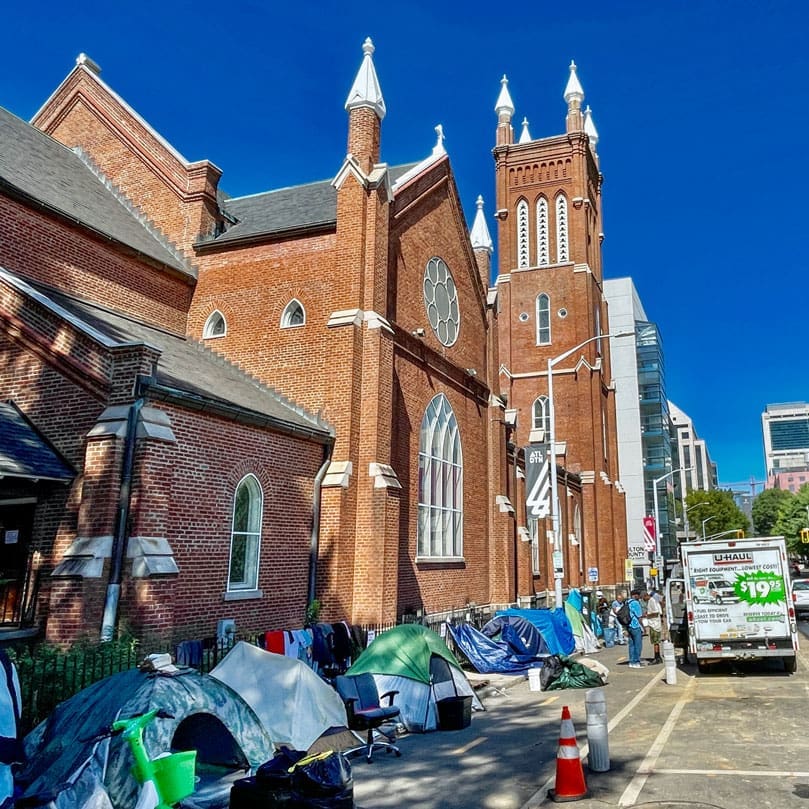
ATLANTA—For more than two years, tents, tarps and other make-shift shelters filled the sidewalks on Martin Luther King Jr Drive alongside the Shrine of Immaculate Conception, one of the oldest parishes in the Archdiocese of Atlanta.
Now, the city-led effort to end homelessness in downtown Atlanta has come to the church’s front steps.
On Monday, Aug. 25, workers led by Partners for HOME, a nonprofit that manages much of the City of Atlanta’s homelessness programs, started a two-day effort to move people from this corner of downtown into supportive housing. It’s part of the broader initiative of “Downtown Rising” to curb homelessness in certain city neighborhoods before Atlanta hosts the 2026 FIFA World Cup matches.
The parish has faced a “tension” between living the Gospel with its call to serve the less fortunate and people using the yard as a latrine, said Joe Sequeira, a pastoral administrator at the church.
Sequeira attended the Partners for HOME organizational meetings that led to the removal, and he came away pleased that the process respected people’s dignity and needs. The work he saw helps individuals with long-term solutions, not just moving people around so they become someone else’s problem, he said.
For the parish, its identity is tied to its service to men and women in need. A statue of Jesus disguised as a homeless man sits beside its front steps. Members of the church serve sandwiches daily; it hosts the St. Francis Table on Saturday mornings; and for more than 40 years during the winter its basement becomes part of the Bashor Homeless Mens Shelter, opening its door to men living on the streets.
The church, its members and staff befriended who they called “our unhoused neighbors” by distributing food and other outreach. During the spring and summer, parish volunteers and residents of the encampment together cleaned the area, power washed the sidewalks to remove the waste and connected residents with services, Sequeira said.
Since the spring, the city of Atlanta and its partners have cleared two urban camping areas around downtown. The attention then turned to this corner of the city.
Outreach leading to removal
The “Downtown Rising” plan includes 500 rapid-build units for permanent supportive housing with the goal to move an estimated 400 unsheltered people living in downtown Atlanta into secure housing.
According to Cathryn Vassell, CEO Partners for HOME, the effort began several weeks before the Aug. 25 removal.
The organizations want to ensure people have time, dignity and clear information about what services are available to them, said Vassell.
The workers with Partners for HOME have been with the residents for weeks getting to know them, their housing needs and what support would help them.
“It’s been done with a lot of compassion and recognizing their dignity,” she said. As of Aug. 25, 92 individuals of the 104 living beside the Shrine have accepted housing or transitional services.
To minimize confusion and stress during the transition, the Shrine suspended its weekday Sandwich Ministry, which typically operates in the same area as the encampment. Other ministries, including St. Francis Table and its Community Market, remain open.
In a message to the parish community, leaders acknowledged the encampment had “grown exponentially over the last few months” as other areas were cleared.
Looking ahead
As the rehousing phase progresses, the city plans to scale similar outreach to other neighborhoods in 2025, building on what it calls a “housing-first” approach.
A $212 million investment prioritizes permanent supportive housing while also funding emergency shelter, rapid rehousing and critical services such as mental health and substance use treatment, said Vassell.