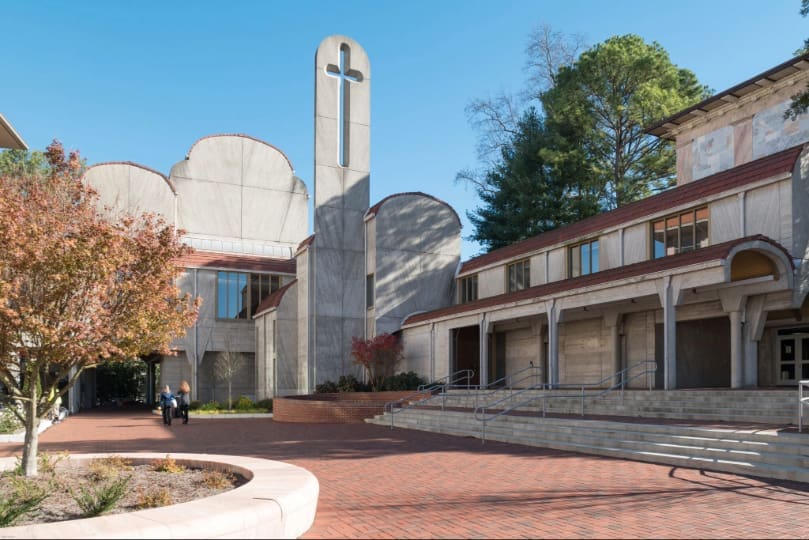
 Photo by Marc Merlin, via Wikimedia Commons
Decatur
Aquinas Center names new executive director
By ANDREW NELSON, Staff Writer | Published February 6, 2026
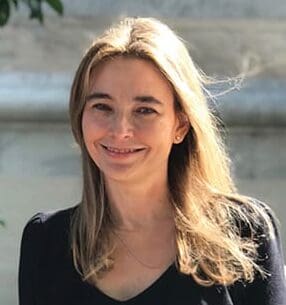
Alice Cameron
DECATUR—The Aquinas Center of Theology at Emory University named Alice Cameron as its executive director.
Located at the Candler School of Theology at Emory University, the Aquinas Center has served the greater Atlanta community for 39 years. Founded in the Dominican tradition, the center’s mission is to foster conversations for the common good in the Atlanta Archdiocese and beyond by offering Catholic scholarly programming that invites ecumenical dialogue.
Cameron has served as the director of operations at the center for the past three years. On two separate occasions, she also served as interim executive director.
In 2022, Cameron graduated cum laude from the University of Notre Dame with a master’s degree in nonprofit administration. Her accomplishments at the Aquinas Center have included deepening engagement of the Catholic-Orthodox programs, designing effective program evaluation of annual offerings, expanding development work and advancing the strategic goals and initiatives of the Aquinas Center.
She is the center’s eighth executive director. Cameron will work with recently appointed Assistant Director Tina Guyden and Catholic-Orthodox coordinator Deacon Bob Hauert.
Cameron answered written questions about her new role. Her answers were lightly edited.
Can you share a bit about your faith life growing up in your family? And where do you worship now? Are you involved in any ministries?
Alice Cameron: My Catholic faith was an integral part of how I was raised, and I cherish those memories. We attended Mass every weekend and often stayed for fellowship afterwards. My home parish in South Florida offered coffee and donuts each Sunday during Ordinary Time, a ritual that enabled us to build community with other parishioners.
At home, my mother was passionate about the power of prayer. She spent evenings cultivating that love in both my sister and me. She encouraged us to reflect as we pray, to pray whenever possible and to consider the needs of others, as our greatest call was to love our neighbor. Her favorite prayer was the Miraculous Medal Novena, which she found both powerful and comforting.
I moved to Gwinnett County in 2000 and became a parishioner at St. Monica Church in Duluth. I served the parish in many capacities: as a catechist teaching second graders; as a volunteer helping organize supplies for the Medical Mission to Hinche, Haiti; and as a volunteer making baptismal bibs for infants. Today, I am often found at Mass throughout the Archdiocese of Atlanta. It’s been helpful in my role to get to know the local pastors and clergy, and to discern how the Aquinas Center can serve their parish communities in a meaningful way.
What is the Aquinas Center of Theology at Emory University for people who have not heard of it? What does it offer to the Catholic community in the archdiocese?
Cameron: The Aquinas Center is a Catholic educational center that offers free programs and resources to the community. Our programs explore and engage the intellectual, moral, and spiritual life of the Church. Since there is no Catholic university in the state of Georgia, the Aquinas Center serves as a home of Catholic public scholarship in the Archdiocese of Atlanta and at Emory University.
There is a deep need for our educational programs and resources, which prioritizes fostering faith, building community, and deepening dialogue. As laity, we need to embrace our baptismal call to live our Catholic faith and contribute to the common good. Our programs explore and invite conversations on both.
We bring many of our dynamic programs into the parishes, so the Aquinas Center can support Catholic education and parish life simultaneously. This includes expanding our Spanish-language programs, which began in 2019, and hospitality for those who attend.
Our resources are free and accessible on both our website (aquinas.emory.edu) and YouTube channel (youtube.com/AquinasCenter). That way, parishes, church leaders and community members can view our programs on demand.
How do you hope to shape the direction of the Aquinas Center in the next year and over the next five years?
Cameron: The Aquinas Center will celebrate its 40th anniversary in 2027. I am proud to have been a part of our good work, but there is so much more to do!
I plan to expand our parish programming, and commit to developing programs that embrace, educate, and celebrate the People of God. Our programming must continue to emphasize respect for all people, embracing different cultural influences and perspectives. We want to cultivate a more just society for all, in accord with Catholic Social Teaching.
Expanding our parish programming serves a dual purpose: it supports the pastors and directors of religious education, and we can meet parishioners where they are. Not everyone has access or ability to travel to Emory University. Making our programs and resources more accessible is a key short-term objective.
At Emory University, I have already taken steps towards reinvigorating our work with students. We are about to begin an Aquinas Fellow program, thanks to the generosity of a John Templeton grant funded through the Lumen Christi Institute. It is our hope that through community, mentorship and Catholic intellectual resources, the Aquinas Fellows will have the opportunity to discern, reflect and flourish as individuals as they embark on their professional journeys.
I am enthusiastic about our plans, and I eagerly look forward to this next chapter for the Aquinas Center of Theology!
What local partnerships or initiatives are you most excited to build or deepen as you being your leadership?
Cameron: The Aquinas Center historically has prioritized ecumenical and interreligious dialogue, which is a facet of our work that I believe needs greater focus and attention.
I was profoundly moved by a conversation that I had with Cardinal Wilton Gregory when he served as archbishop of Atlanta. He shared with me that ecumenical and interreligious dialogue must take place on three levels to attain progress: with theologians; hierarchs and church leaders; and with the laity. His words resonated with me as I worked with Deacon Bob Hauert on restructuring the programs of the Catholic-Orthodox Initiative.
Expanding the dialogue has been edifying for our community, and attendance has drastically grown. Our last Catholic-Orthodox program in November 2025 had 92 attendees. It has been shared with me that the dialogue has generated a sense of belonging and hope for the future, particularly during these challenging times when many feel the weight of societal concerns, personal burdens or isolation. I plan to prioritize dialogue to deepen that sense of belonging in new and innovative ways moving forward.
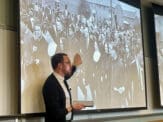
At the center’s recent Aquinas Day, historian Matthew Cressler asked who is a ‘good’ Catholic?”