


 OSV News photo/Rick Wilking, Reuters
Atlanta
Helping others a balm for Atlanta’s Hurricane Katrina survivors
By ANDREW NELSON, Staff Writer | Published September 4, 2025
ATLANTA—As Hurricane Katrina prepared to roar into landfall, New Orleanians faced hard choices. Some sat in hours of traffic, others got out of harm’s way with three days’ worth of clothes. Days later, volunteers and first responders witnessed dazed residents carrying their only possessions in their arms.
Two decades after the 2005 storm that claimed an estimated 1,400 lives, the memories of devastation, heartbreak and service are never far from the surface.
Bernadette Porche’s voice still falters talking about the storm. She and her late husband, Albert, left behind a life in New Orleans, along with their mom-and-pop pharmacy, a mainstay in the 9th Ward, a place where neighbors shared life and news even when they didn’t need medicine.
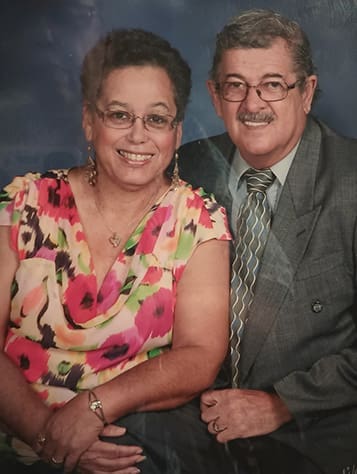
Bernadette and Albert Porche fled ahead of Hurricane Katrina, leaving their home, their neighborhood pharmacy and their church family. They later settled in Atlanta, worshipping at St. Anthony of Padua Church. He died in 2013 and was buried in New Orleans. She organized a parish ministry for the homeless.
At their daughter’s urging, they left their city, which was not their typical habit for storm prep. The family thought their hotel stay would be a “little vacation,” expecting to return home quickly. But returning was impossible with the floodwaters.
The destruction wrecked their homes, livelihood and the fabric of their community.
“I had a life there. We had a business, and my friends were all there,” said Porche. “My church was there. I loved my church. It was a small neighborhood church.”
After choosing to stay here after Katrina, they purchased a home near Atlanta’s Cascade Road. He went to work for CVS. She connected with others with roots in New Orleans and became active at St. Anthony of Padua Church. She developed deep friendships here, taking trips to New Orleans with others that from start to finish are filled with laughter and sharing.
“It’s not the material things in life you find out. It’s the people, the love and the caring,” she said.
Twenty years after Katrina, she knows God had a roadmap for living.
“This is what God is leading me to do. Don’t get me wrong. God and I argue a lot. A lot. I tell him, ‘I don’t think so.’ But he has a plan, and he has a path for my life,” she said. Albert was laid to rest in New Orleans when he died a dozen years ago.
As chaplain at Xavier University of Louisiana, Dominican Father Jeffery Ott knew his students were being evacuated, so he helped his family set out for Texas. Now pastor of Our Lady of Lourdes Church in Atlanta, Father Ott recalls the strangeness of seeing the interstate jammed with evacuees.
“It was surreal to see that many lanes of traffic on both sides of the interstate filled with cars moving,” he said. “Thankfully there was no standstills and though there was heavy traffic it moved at the speed limit or faster and we made it to Dallas in about nine hours.”
Larry Soublet worked as a supervisor with the Sewerage and Water Board of New Orleans and had an eye on the storm’s severity. He insisted that his then-girlfriend, Beatrice Perry, leave, with her aunt and her cat, Madagascar, filling her car. He drove separately with his son. After a brief stay in a Texas hotel room, they traveled to Atlanta to join her daughter.
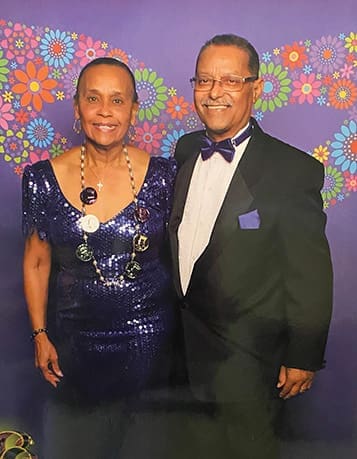
New Orleans natives Larry and Beatrice Soublet found a welcoming community at Our Lady of Lourdes Church, Atlanta, when they relocated to the city following Hurricane Katrina. They started a ministry to foster conversations between people of different races, which continues to this day. When he died in 2021, Larry was laid to rest in New Orleans.
The storm upended their lives. While her home in the 7th Ward neighborhood was unscathed, Larry’s Carrollton area house was a total loss. Facing his medical challenges, they decided to resettle here, and they were married.
“In the end, all can be taken from you, but you just stand on your faith,” said Beatrice Perry Soublet, a retired Catholic school principal.
The New Orleans community still has a claim on her heart. They returned there for their wedding in 2014. Larry died in 2021 and was buried in their hometown. She still visits friends and enjoys the city.
“My feelings are what I call guides, that guide me through looking around and enjoying the architecture, enjoying the people. But when they become ghosts, when it starts hurting me, that’s when I know I was right not to stay,” she said.
In the aftermath of the Category 5 storm, displaced people from the Gulf Coast and New Orleanians found refuge in Atlanta. The number of transplanted evacuees ranged from 84,000 to 100,000 in the early months after the storm. At Decatur’s St. Peter Claver Regional School, 42 students from the Gulf Coast region enrolled. Up to that point, the school had around 100 students. Parents’ jobs or a second move lowered the number, but six months after the storm, 25 young people had stayed to become part of the school community.
Lessons in the aftermath
While some departed ahead of the storm, others stayed to witness the aftermath.
Bishop John N. Tran waited out the storm in the rectory of his parish, remaining with his father and a deacon intern.
Visiting nearby St. Bernard Parish afterward, the scenes reminded the priest of his family fleeing Vietnam, describing it as “something that I never thought I would see in this country.” He prayed with the scores of people awaiting a ferry rescue and collected phone numbers so he could help alert their distant family members they were alive.
Bishop Tran, having served as the chaplain of the St. Bernard Sheriff’s Department, uncovered an old badge to gain entry to restricted areas.
“I still had the badge for some reason. I still had the badge in my car,” he said.
The next months were spent going into St. Bernard Parish frequently to celebrate Mass with the first responders and to accompany them through devastated areas where he had once served.
During this time, he met Governor Kathleen Blanco, Mayor Ray Nagin, and President George W. Bush in St. Bernard. He had lunch with Governor Blanco, who thanked him for staying behind, to which he jokingly said, “I stayed behind because I’m an idiot.”
Twenty years on, the memories and sorrow are healed scars. Service to others is not a cure to pain, but those who lived through the hurricane’s upheaval said it can be a source of healing. The hurricane showed them the value of faith, human connection and helping others.
The Porches found a new life in their Atlanta parish, singing in the choir and later organizing meals and outreach to people living on the streets. The Soublets, made their home in East Point and started an anti-racism program at Our Lady of Lourdes Church, bringing people from different races to share a meal and conversations.
Bishop Tran at a subsequent New Orleans-area parish organized disaster-response volunteers.
In Father Ott’s eyes, government systems failed, but people helping people prevailed. There are many challenges in New Orleans, he said, but “I now realize that bonds of friendship, neighborhoods, family, social and cultural celebrations are the lifeblood for many New Orleanians.”
“Gratitude is the only way to get through life,” said Porche. Being of service to others in the face of hardship is a small step to “repay God for the goodness and mercy he gives us.”