


1,700 years: The First Ecumenical Council of the church and its proclamation of Jesus Christ
By FATHER LEANDRO NUNES TEIXEIRA | Published September 10, 2025 | En Español
This year 2025 marks the 1,700th anniversary of the First Ecumenical Council in the history of the church, held in Nicaea, in what is now the city of İznik, Turkey. Among the topics addressed, we highlight the resolution of the Christological controversy. Although ancient, the Council of Nicaea remains highly relevant today, offering valuable insights for the promotion of ecumenical dialogue, the development of synodality, and above all, the proclamation of Jesus Christ.
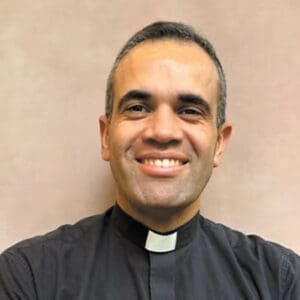
Father Leandro Nunes Teixeira
The context leading up to the Council was marked by Arianism, a doctrine claiming that Jesus was a created being with divine attributes but not divine in himself. This heresy, which originated within a local church (Alexandria, Egypt) and gradually spread, led Emperor Constantine to convene an assembly to resolve the theological disagreements. As a communion of local churches represented by their bishops, the synodal dynamic of Nicaea when discussing and defining issues continues to inspire us today to walk the path of listening, dialogue, discernment and consensus. We emphasize this because such attitudes were essential in the formulation of the Symbol of Faith, which, although expressed in philosophical terms rooted in Greek culture, became ecumenical (universal) by extending its message of salvation in Jesus Christ to all peoples.
The celebration of the promulgation of the Nicene Creed during this Jubilee Year of Hope, along with a new pontificate is inspiring. The words of Pope Leo XIV in his first greeting from the balcony of St. Peter’s Basilica, as well as in his first Mass and meeting with the cardinals the following day, express that the church must center its proclamation on Christ, because “whenever we make the effort to return to the source and recover the original freshness of the Gospel, new avenues arise, new paths of creativity open up, with different forms of expression, more eloquent signs and words with new meaning for today’s world” (Evangelii Gaudium n.11).
The importance of Christ’s primacy in evangelization, the homoousios (consubstantial) Son of the Father, mirrors the harmonious movement of the human heart: systole and diastole. The first movement, ad intra, born from communion, contributes to the second movement, ad extra, a diastole that sends the whole church outward like a centrifugal force into mission. It is not about inventing new proposals, but about focusing on Christ, who inspires and renews ecclesial life.
Thus, the commemoration of the 1700th anniversary of the Council of Nicaea is an invitation for all to rediscover the treasure of the Creed and to share it with joy. In the face of today’s polarizations, with their painful consequences, the “one, holy, catholic, and apostolic” church, united by the Holy Spirit, will be the “universal sacrament of salvation” when its proclamation and evangelization are rooted in Jesus Christ, “one Lord, the only-begotten Son of God, begotten of the Father before all ages, God from God, Light from Light, true God from true God, begotten, not made, consubstantial with the Father; through Him all things were made.” More than words, the praxis of Nicaea and its content expand the heart in our time toward the conformity of all the baptized to Christ. For only as a symphony, as a missionary community united in diversity, will we achieve what Pope Leo XIV has asked of us since the beginning of his pontificate: a proclamation of the Gospel centered in Jesus Christ, offering life and salvation to all.
Father Leandro Nunes Teixeira is administrator at Saint Theresa of the Child Jesus Church, Douglasville.