


Thoughtful stewardship of our common home
By BISHOP JOEL M. KONZEN, SM | Published July 10, 2025 | En Español
I grew up in small-town Ohio, where many such towns and counties had a “conservation club.” The club was mostly a loose association devoted to the promotion of sustainable hunting and fishing. It was where young people, along with 4-H and Future Farmers, first encountered the ideas of conservation: that we must protect our natural heritage even—and especially—as we expect it to sustain us in the future.
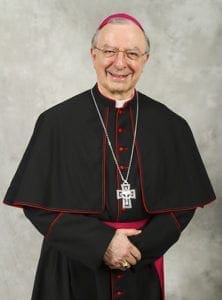
Bishop Joel M. Konzen, SM
While I am never sure that it has yet achieved its envisioned impact, Pope Francis’s 2015 encyclical Laudato si’ subtitled “On Care for Our Common Home,” was a bold and necessary commentary on the need to be involved in thoughtful stewardship of the planet we inhabit. It brought to our attention as a church and in the larger world the need to bind our efforts for the sake of ensuring that the children of our day and the generations that follow will have every opportunity to thrive. It is our Christian duty to ensure that this future applies also to those who are most deprived of the essentials for living in dignity.
In Laudato si’, Pope Francis wrote, “The urgent challenge to protect our common home includes a concern to bring the whole human family together to seek a sustainable and integral development, for we know that things can change. The Creator does not abandon us; he never forsakes his loving plan or repents of having created us. Humanity still has the ability to work together in building our common home. Here I want to recognize, encourage and thank all those striving in countless ways to guarantee the protection of the home which we share. Particular appreciation is owed to those who tirelessly seek to resolve the tragic effects of environmental degradation on the lives of the world’s poorest.”
It becomes more of a moral imperative for those of us who enjoy the benefits of steady incomes and comfortable surroundings to advocate and exercise care for those who are without the means to fully sustain themselves. In his encyclical Redemptor Hominis, Pope St. John Paul II wrote, “Christ teaches us that the best use of freedom is charity, which takes concrete form in self-giving and in service.” John Paul also urged us Catholics to what he called solidarity—a concept widely championed in his native Poland at the time that Communism was replaced by democracy. He felt that free peoples bound together by a common desire to lift the circumstances of all our sisters and brothers would best witness the gospel hopes that all would be one and that none should be left behind.
While my immediate family did not farm—as my grandparents and cousins did—I lived near those who did. Across the road from my childhood home, there was a large farm, and trucks each day would pass our home carrying tomatoes, grain, alfalfa, and sugar beets to processing. I was naturally initiated into notions of how the earth produces its provisions for us and how we, in turn, act responsibly to ensure its viability going forward. This is why Laudato si’ seemed to me so sensible and so timely. I see, too, that it is often those on the bottom end of incomes and resources who suffer most from natural disasters and other lethal forces that they do not control.
If we will live thoughtfully and generously when it comes to the protection of our planet, our common home, we can aid those who are seeking to raise families with the basic goods and freedom that God has promised would be given to all who call upon His name. In addition, as we can, we want to advocate for programs and structures that advance what Pope Francis called “integral ecology”: care for the earth that reflects our human and social responsibilities to our God and to our fellow humans.